May is Mental Health Awareness Month, a national moment to recognize the challenges so many face and to collectively combat the very real stigma around talking about those issues.
As I reflect this year on why “awareness” is such an important factor in driving better mental health for our communities, I am struck by the continued stigma that many men face in talking about any negative feelings, and how many lives can be saved by culturally normalizing men to feel.
The data is clear: men are in crisis. Of the nearly 49,000 Americans who died by suicide in 2024, men accounted for 80% of those deaths. In other words, men are four times as likely to die by suicide compared to women.¹
There is absolutely a societal element at play. Dr. Claudia Black famously wrote about how children in troubled families can develop rules such as “don’t talk,” “don’t trust,” and “don’t feel” as survival strategies. Versions of these same lessons are routinely taught to young boys throughout our society, telling them that men are expected to be stoic, and that any expression of emotion will be dangerous.
It’s no wonder then that so many men don’t know how to articulate their negative emotions, which leads to suffering in silence without any outlet for release. Instead of sharing those feelings with others, too many men fall into cycles of rumination that can ultimately lead to self-harm.
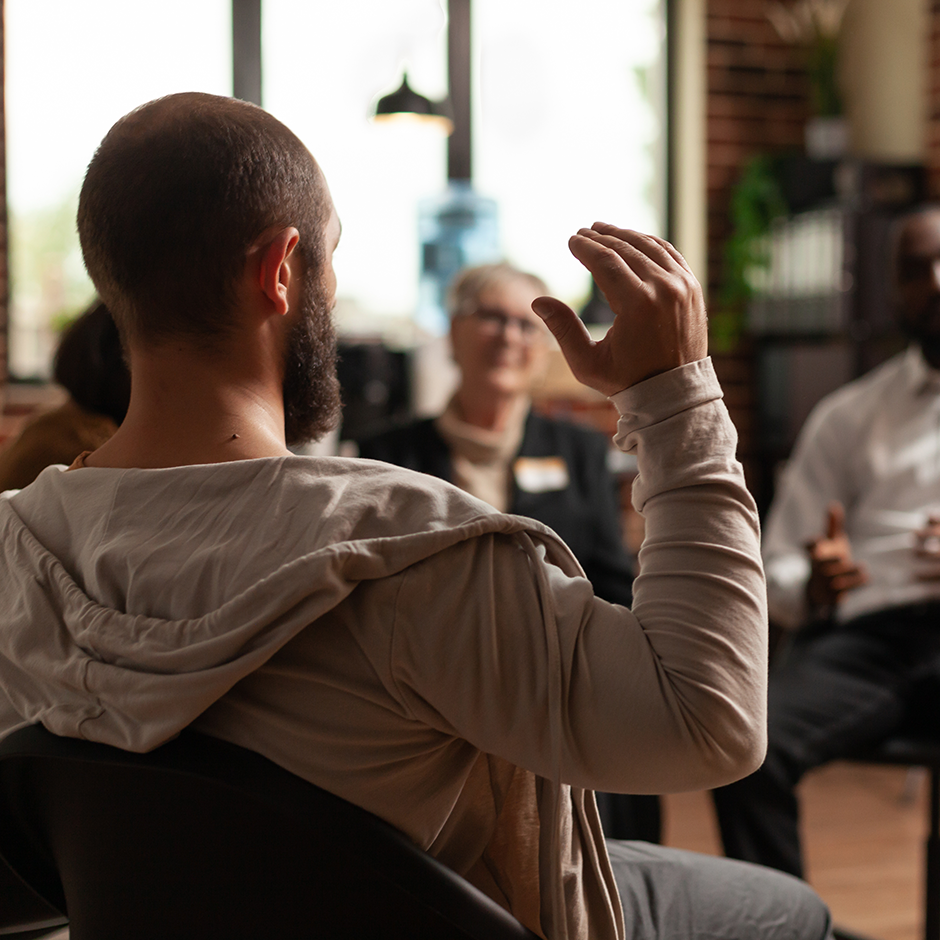
This isn’t a hopeless problem, but it will require an intentional and concerted effort to change things for the better. At the community level, we need to be focused on reducing stigma through awareness events, public gatherings, and men’s groups. And more broadly, we must fight the masculinity stereotypes that emphasize bottling up emotions and instead promote vulnerability by building safe places for men to talk about their depression, anxiety, and more.
On an individual level, each of us likely have men in our lives, friends, family, neighbors, who are quietly suffering, and I can’t overemphasize how important it is to create intentional spaces and intentional times for them to share their pain. One of the most powerful techniques is to avoid close-ended questions: Instead of asking “Are you doing OK?” try asking “How are you feeling?” And for conversations between men, validation can go a long way. “I’ve been there too” can make a real difference for a man who is just beginning to open up.
Perhaps one of the most impactful things we can do is to live these principles and model them for our boys and sons. This means making space for their emotions and teaching them how to express them in constructive ways. It means opting out of “tough guy” behavior, instead allowing them to see us when we struggle, and showing them how to be accountable for our emotions in our relationships. When we mess up, we can apologize to them. When we’re proud of them, we let them know. And when we see them struggle, we make space for it rather than urging them to push past it. When boys see us live these principles, it gives them permission to do the same.
The men’s mental health emergency is often described as a “male loneliness epidemic.” What’s crucial to understand is that it’s not only about social isolation. In fact, many men are spending time around other people at work and school, at the gym, at bars and restaurants. The loneliness that is harming so many men is an emotional solitude. They don’t know that others are experiencing what they experience, and they don’t believe anyone wants to be present with them and their pain.
The first step in reducing this emotional loneliness is removing the stigma around sharing their feelings, and that’s why events like Mental Health Awareness Month matter.
¹ American Foundation for Suicide Prevention, “Suicide Statistics,” afsp.org/suicide-statistics